
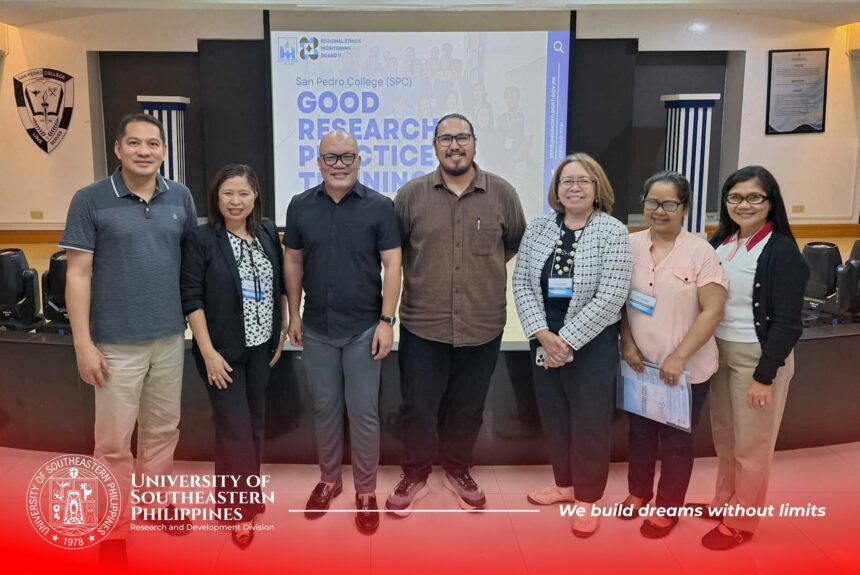
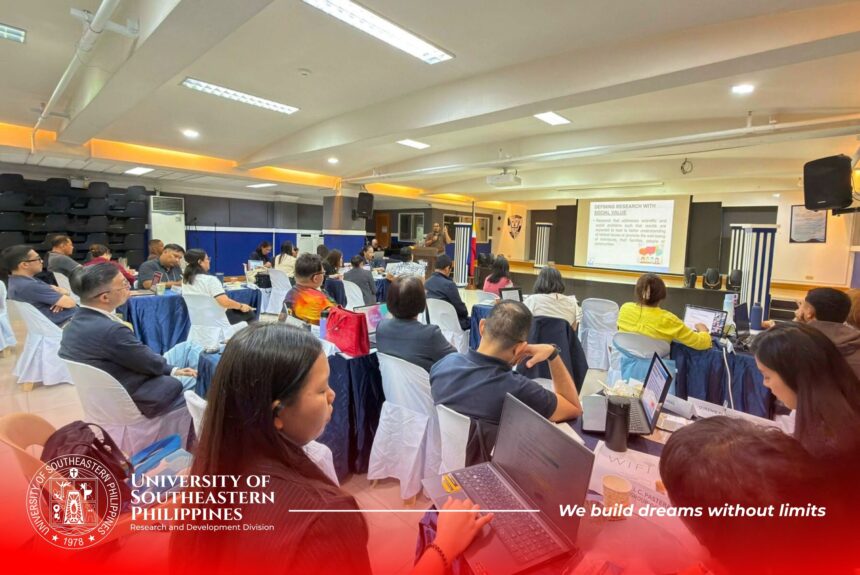
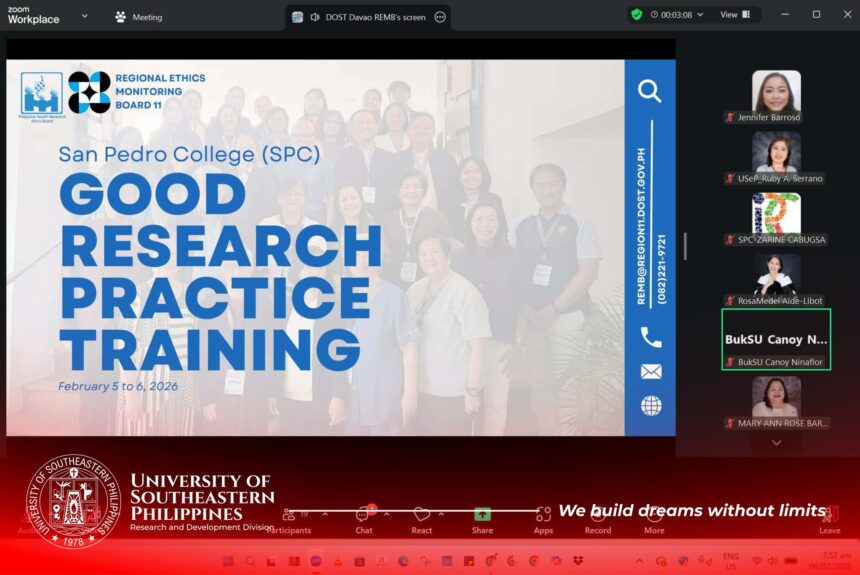
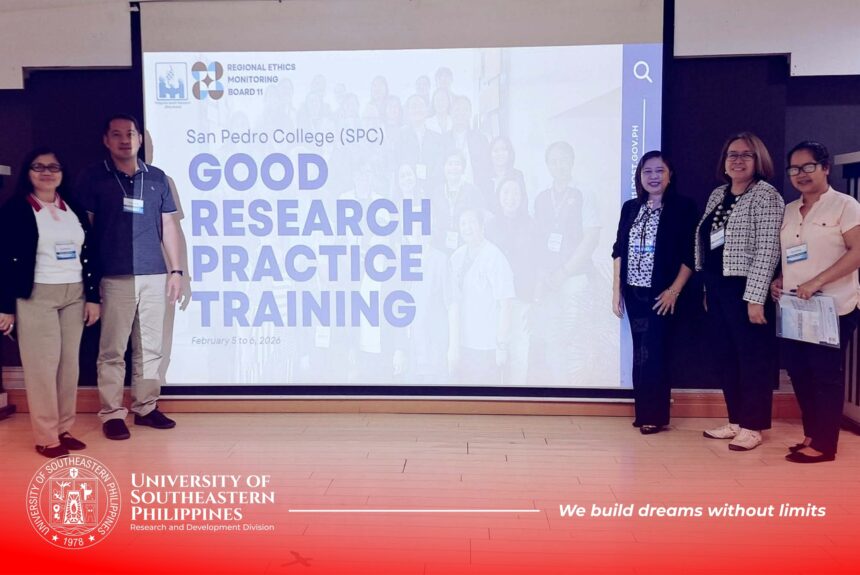
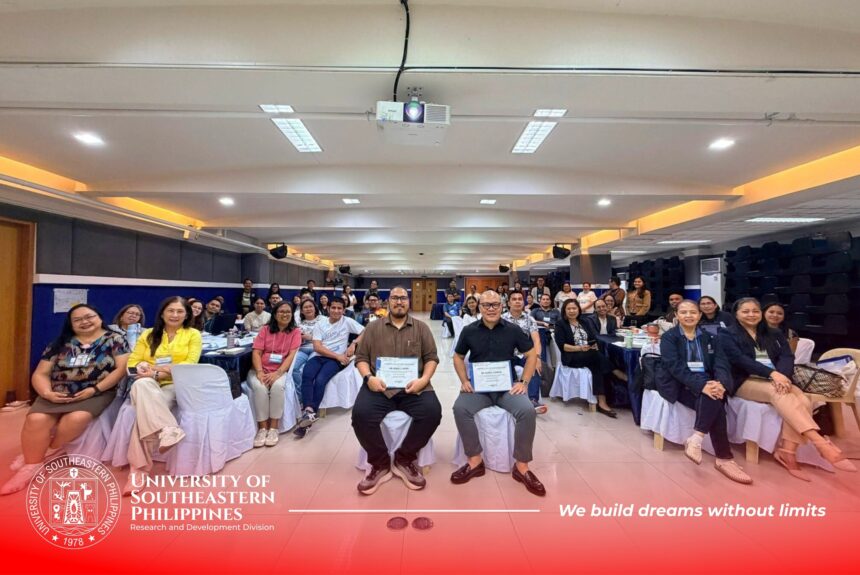
Faculty members of the University of Southeastern Philippines (USeP) participated in the Good Research Practice (GRP) Training held on February 5–6, 2026, at the San Pedro College (SPC) Main Campus in Davao City, with Day 1 conducted onsite and Day 2 carried out online via Zoom. Hosted by the San Pedro College Research Ethics Committee (SPC REC) in partnership with the Research, Publication, and Innovation Center, the training gathered REC members and invited faculty from partner institutions to strengthen ethical, credible, and methodologically sound research practices.
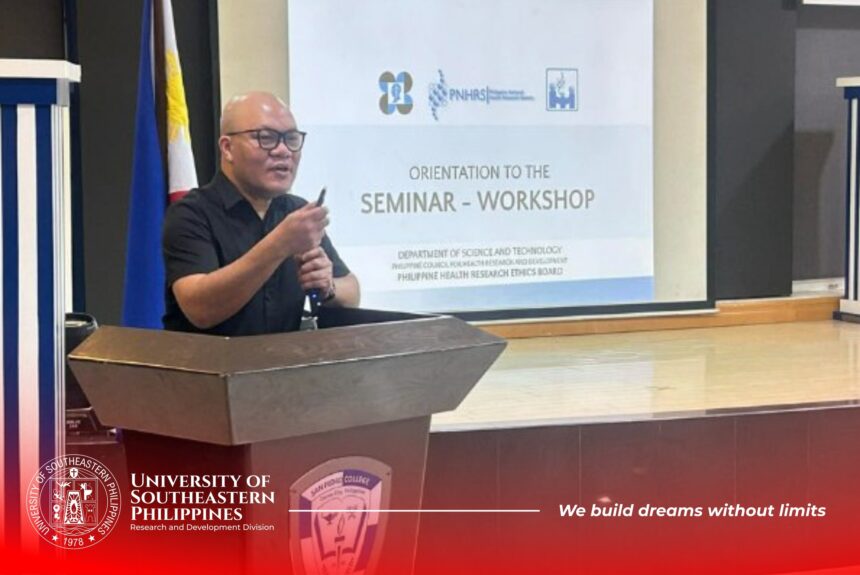
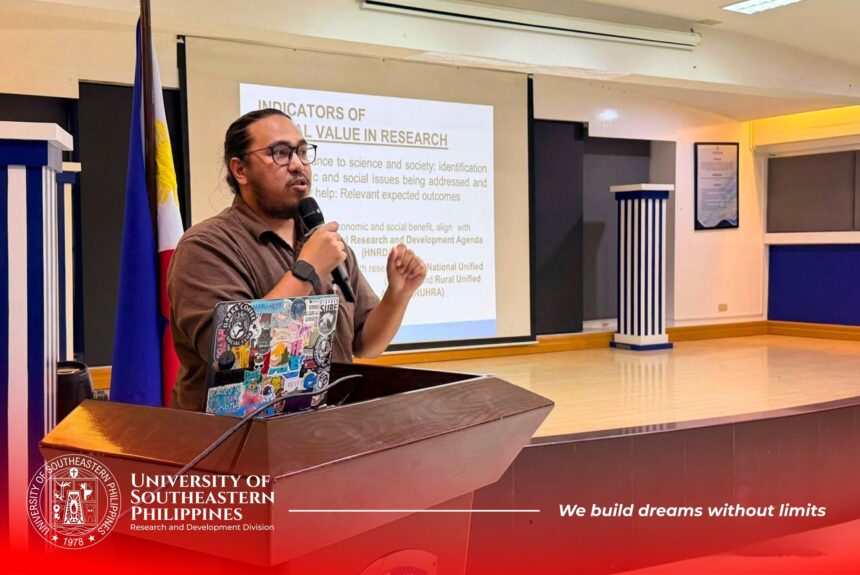
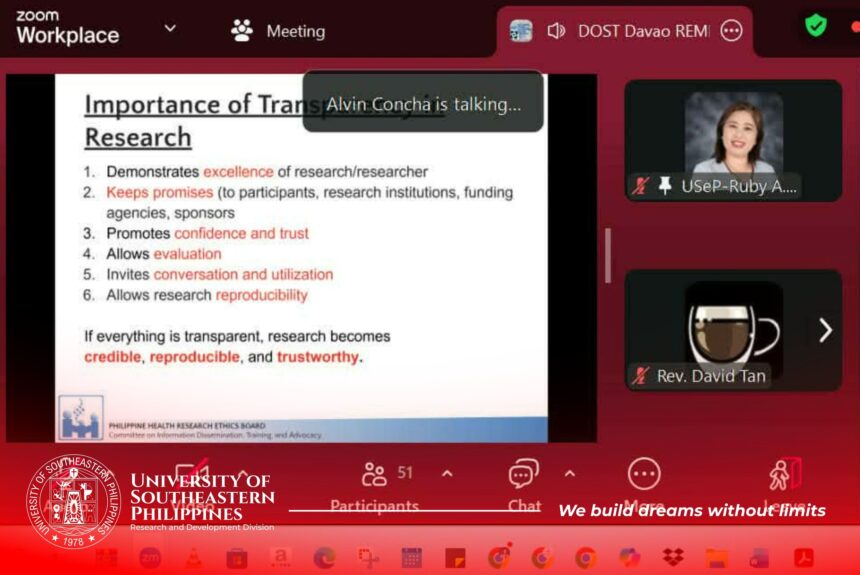
The training equipped USeP faculty with practical competencies in responsible research conduct, covering protocol development, ethical data analysis, authorship, and research dissemination. Core sessions were facilitated by Dr. Alvin S. Concha, Chairperson of the Regional Ethics Monitoring Board XI (REMB XI), who guided participants through the principles of Good Research Practice and emphasized integrity in publication. Discussions on ethical issues in protocol development and data analysis were further enriched by Mr. Rodel C. Roño of the Philippine Health Research Ethics Board – Committee on Information Dissemination, Training, and Advocacy (PHREB-CIDTA), highlighting the critical role of ethical oversight in ensuring truthful and accountable research outcomes.
Through interactive lectures and guided discussions, faculty participants strengthened their capacity to navigate real-world ethical challenges and apply standards that protect research integrity and public trust.
USeP’s participation in the GRP Training marks another strategic milestone toward the establishment of the University’s own Committee on Research Ethics (USePCRE), targeted for full operationalization this year. The engagement reinforces faculty readiness to support ethical review processes and advances USeP’s broader goal of institutionalizing responsible research practices across academic units.
USeP continues to invest in collaborative capacity-building initiatives that elevate research quality while ensuring that scholarly work remains anchored on integrity, accountability, and respect for the communities it serves.
Leave a Reply