
USeP CARS and DOST-PNRI explore partnership on rapid heavy metal detection research

USeP CARS and DOST-PNRI explore partnership on rapid heavy metal detection research

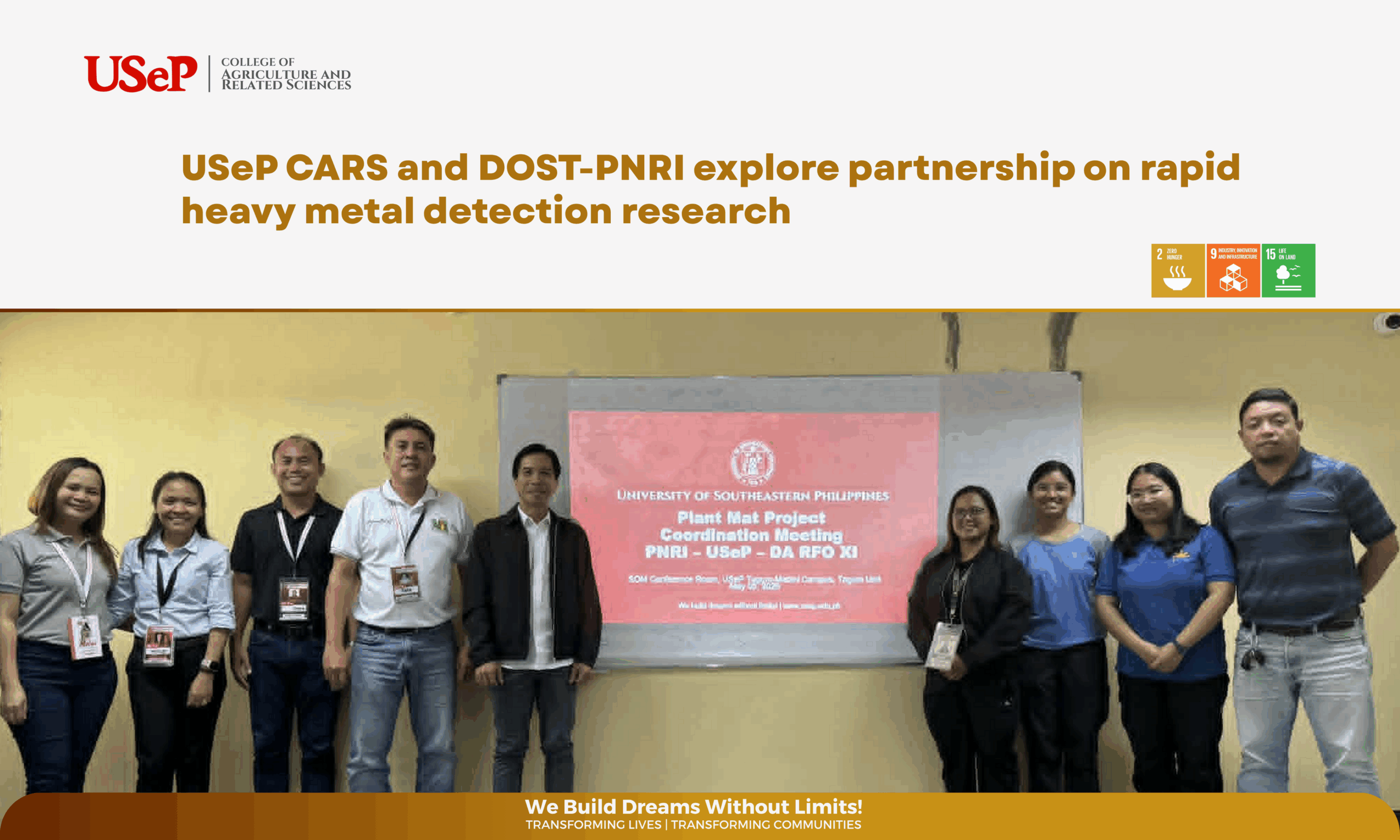
Science and agriculture converged in a high-level research discussion as the Department of Science and Technology – Philippine Nuclear Research Institute and the University of Southeastern Philippines College of Agriculture and Related Sciences (CARS) convened on May 5, 2026, to advance a collaborative project aimed at strengthening agricultural safety and scientific innovation.

Held at the Science Building Conference Room of USeP Tagum–Mabini Campus, Tagum Unit, the meeting centered on the proposed research initiative titled “Development and Application of Rapid, Non-destructive Heavy Metal and Trace Element Detection Techniques in Plant Materials (Plant Mat).” The project seeks to develop efficient and science-driven methods for detecting heavy metals and trace elements in plant materials without damaging samples—an innovation expected to support food safety, environmental monitoring, and sustainable agricultural production.
Representing USeP were Vice Chancellor Dr. Cesar A. Limbaga Jr., CARS Dean Dr. Emelie G. Pelicano, BSA Program Head Dr. Dernie T. Olguera, OIC ARTIC Manager Mr. Roel Z. Rementizo, and Soil Science faculty members Ms. Mechelle R. Mangmang and Dr. James Jade S. Lasquites. Leading the delegation from DOST-PNRI were Senior Science Research Specialist and Project Leader Roland V. Rallos, Science Research Analyst Ms. Nerrisa P. Bacerra, and CIP Graduate Fellow and Project Staff Ms. Lorraine S. Lao.
During the meeting, both institutions discussed potential research frameworks, technical methodologies, and collaborative strategies for implementing the project in agricultural settings. The discussions emphasized the importance of rapid, non-destructive detection technologies for ensuring crop quality, identifying contamination risks, and improving agricultural decision-making. They also explored possible field applications, laboratory integration, faculty and student involvement, and the long-term benefits of research partnerships in addressing emerging environmental and food security challenges.
University officials highlighted the need to strengthen research-driven collaborations that will directly benefit the agriculture sector. Meanwhile, representatives from DOST-PNRI stressed the significance of nuclear and analytical science in creating innovative solutions for modern farming and promoting environmental sustainability.
The initiative supports Sustainable Development Goal 2 by promoting safe and sustainable agricultural systems and enhances Sustainable Development Goal 9 through scientific research and technological innovation. Additionally, it contributes to Sustainable Development Goal 15 by fostering environmental monitoring and responsible management of natural resources.

More than just a meeting of institutions, the gathering marked the start of a research partnership focused on innovation, scientific integrity, and public impact. As agriculture faces increasing environmental and food safety challenges, collaborations like this position USeP and DOST-PNRI at the forefront of developing smarter, faster, and more sustainable solutions for the future.

Leave a Reply

Your email address will not be published.